Dark Skies
Weekly Watch
May 11, 1970, was a day of tragedy for my hometown of Lubbock, Texas. Death and destruction were on their way, but the day had been pleasant. Not long before sunset, I stood on a railing of the backyard fence so my head would be high enough to see and converse with another kid on the other side of the fence. When we began talking, everything seemed normal. But the conversation ended abruptly when I realized that the day had suddenly grown dark. I looked up and saw why. The blue sky had been replaced by churning, dark, angry-looking clouds.
The abruptness of the change gave me a feeling of excitement along with a stab of fear. I had lived in tornado alley my whole life, but I had never seen weather like this. At my house, things stayed calm that night. But a few miles away, an F5 tornado would kill 26 people. Each of those was a tragedy, but the number of deaths still seems miraculously low. The twister rolled through both business and residential areas with wind speeds that Ted Fujita — creator of the Fujita scale of tornado intensity — estimated at over 290 mph.
I’ve been thinking about that night and the suddenness of the darkening sky because I had a similar experience earlier this month while writing a piece called “9-11 2.0.” I wrote, “A new 9/11 is taking place in America. It is happening before our eyes. But it is so big and so terrible that our brains struggle to interpret what our eyes tell us. A cascading collapse is underway.”
President Trump says that things seem to be humming along nicely, and he makes sense. On September 16, The New York Post ran an article headlined, “Americans are richer than ever — and poverty hits an all-time low.” Economically, what more could you ask? U.S. Census Bureau data shows that, even after adjusting for inflation, median household income is at an all-time high. And the poverty rate is lower than it has ever been!
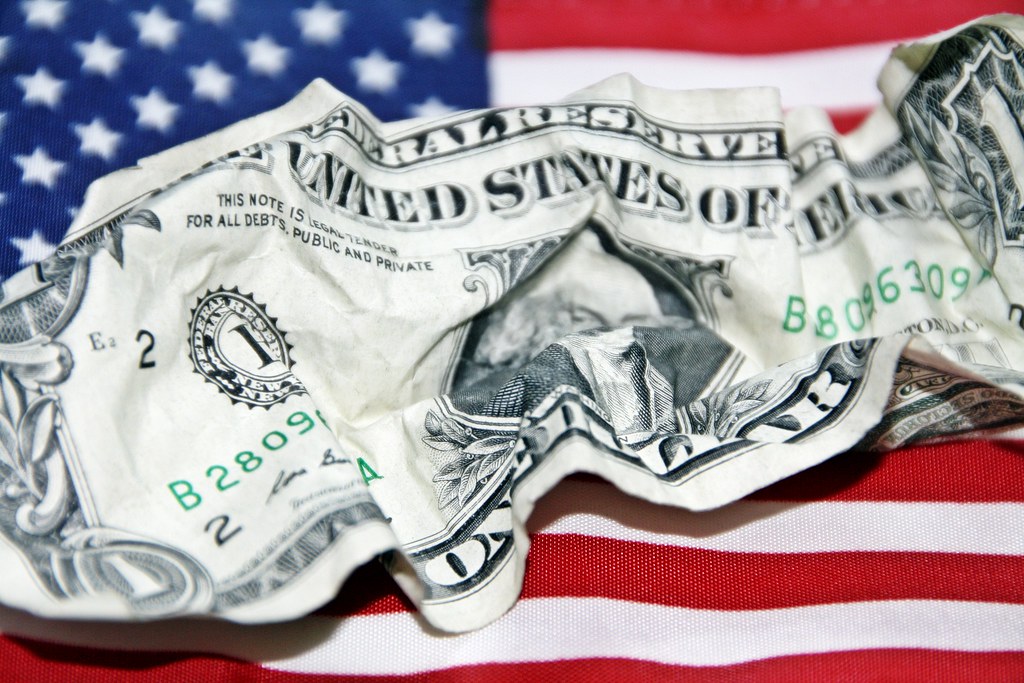
But in August, the U.S. national debt surpassed $40 trillion. In 1981, President Reagan gave a nationally televised prime-time address warning that U.S. debt would soon reach $1 trillion. Adjusted for inflation, $1 trillion then amounts to $3.7 trillion in today’s money. But we’re at $40 trillion. Is our present prosperity borrowed? Is payment about due?
The Bible teaches that moral strength and economic strength are inextricably tied together. Psalm 107:34 says, “A fruitful land into barrenness, for the wickedness of those who dwell in it.” Proverbs 11:11 in the New Living Translation says, “Upright citizens are good for a city and make it prosper, but the talk of the wicked tears it apart.” Proverbs 14:34 says, “Righteousness exalts a nation, but sin is a reproach to any people.”
Politics won’t fix this. We desperately need to speak the Gospel message — and to live it. God rescued America many times over the last 250 years when people knelt in prayer. In our arrogance, we have forgotten that the superstructure — the inner strength — of a nation is not economic, but moral. It is there that the cascading collapse is gaining ground and speed. Rescue is still possible because God is omnipotent. But to receive rescue, we must turn to the Rescuer.